The Second Novel

His computer crashed and suddenly all of his work disappeared. The screen went black without ceremony: no warning spin, no flicker of mercy. Just darkness. And in that darkness, the hollow reflection of Daniel Mercer’s face stared back at him.

For a moment, he didn’t breathe. Six months of work. One hundred and twelve thousand words. Gone.

“No, no, no, no…” His fingers hovered over the keyboard as if refusing to accept the verdict. He jabbed the power button. Nothing. He unplugged the cord, plugged it back in. Still nothing. His pulse thudded in his ears, loud enough to drown out the rain battering the apartment windows. He had been so close.

After his debut novel, The Glass Orchard, exploded onto bestseller lists, Daniel had become the literary golden child. Interviews. Podcasts. A film option. Readers calling him “the next great voice of his generation.”

And then came the calls for the second book. The one that would really matter. The one that would prove he wasn’t a fluke.

For months, he had written and deleted. Drafted and abandoned. His publisher’s emails had grown increasingly strained in their politeness.

Just checking in!

We’re excited to see where this is going.

We’ll need a draft by the end of the quarter to stay on schedule.

Fans were less polite.

When’s the next book?

Don’t pull a one-hit wonder on us.

Hope you’re actually writing and not just enjoying the fame.

The words had crawled under his skin.

And then, three months ago, it happened. The idea. It struck him like lightning. A story about memory and identity. About a man who wakes each morning in a different version of his life. It was sharp, intimate, strange in exactly the right way. It felt dangerous. It felt honest. It felt like something worth writing. Daniel had barely slept since.

Tonight, he had written the final chapter. The final page. The final sentence. He had leaned back, staring at the blinking cursor beneath the words:

He finally understood that the life he was chasing had been his all along.

A fitting ending. A triumphant one. And then the screen went black.

Now he was on the floor beside his desk, screwdriver in hand, staring at the open belly of his laptop like a surgeon mid–failed operation.

“Come on,” he muttered. “Don’t do this.”

He wasn’t a hardware expert. He knew this. But desperation has a way of making the most amateur of us bold. He removed and reattached the battery. He searched his phone for emergency repair tutorials. He tried different outlets. Different chargers. He held the power button down for thirty seconds, sixty seconds, ninety. Nothing.

The silence in the apartment grew heavy. His thoughts spiraled. You should have printed it. You should have backed it up manually. You should have known better.

His deadline was in forty-eight hours. His editor had made that crystal clear.

No extensions this time, Daniel. Marketing’s already in motion.

He imagined the headlines if he failed.

Sophomore slump confirmed.

Mercer can’t repeat debut magic.

He sank back against the couch, the disassembled laptop resting uselessly on the coffee table. The rain kept falling, steady and indifferent. He felt foolish for having believed he’d outrun the pressure. For thinking inspiration alone could save him from the weight of expectation. Maybe this was a sign. Maybe the book wasn’t good enough. Maybe he wasn’t.

His phone buzzed. A notification from a fan account: a photo of someone’s dog curled up with a worn copy of The Glass Orchard. Captioned: Still my favorite book of all time.

The kindness of it hurt more than criticism. Daniel pressed his palms to his eyes. Think Daniel, think. Backups. You had to create backups in case this happened. He had meant to buy an external hard drive months ago. He never did. He had told himself he would. He had told interviews he was “meticulous about process.”

He laughed bitterly. Unless—

His hands froze mid–gesture. Cloud server.

When he bought the laptop, the technician had insisted on enabling automatic cloud backup.

“It syncs in the background,” she had said cheerfully. “You won’t even notice it.”

He hadn’t thought about it since.

Daniel scrambled to his feet so quickly he nearly knocked over the coffee table. He grabbed his phone, opened the cloud app with shaking fingers, and logged in.

Loading. Loading. The spinning circle felt like mockery. And then—

Folders. Documents. A list of file names with tiny timestamps beside them.

His heart pounded harder. He tapped the manuscript folder. There it was.

Second_Novel_Draft_v27.

Last synced: 11:42 PM.

He glanced at the microwave clock.

11:47 PM.

Five minutes ago.

A strangled sound escaped him—half laugh, half sob.

He opened the document preview. The text filled the screen. Chapter titles. Paragraphs. His words. All of it. He scrolled to the bottom. The final sentence.

He finally understood that the life he was chasing had been his all along.

Daniel slid down against the kitchen cabinet, phone clutched to his chest. Relief flooded him so violently it left him dizzy. It wasn’t gone. He wasn’t finished. Not yet.

The laptop would need repair. The formatting would need checking. There would still be edits. Rewrites. Doubt. But the story existed.

And maybe that was the lesson he’d been circling all along—the thing his first book had taught him before success made him forget: Stories aren’t fragile because of technology or deadlines. They’re fragile because of fear.

He had written this one not to outdo his first book, not to silence critics, not to satisfy algorithms—but because he finally found something he needed to say.

Daniel wiped his face and let out a long breath. Tomorrow, he would borrow a friend’s computer. He would download the manuscript. He would send it to his editor. Tonight, he simply sat there in the dim kitchen light, listening to the rain and feeling, for the first time in months, like a writer again.
The Forgotten God

He had been the god the Egyptians never noticed.

His name was Kheperon, whispered only once by a dying priest in the time before the first pyramid touched the sky. He was the god of unfinished things—of broken walls, lost words, and dreams that never reached their end. No offerings were made in his name. No hymns rose to him on incense smoke.

While the other gods basked in adoration, Kheperon lingered in shadow, watching.

He watched as Ra, lord of the sun, rode his blazing barque across the heavens each day, greeted by countless voices.

He watched as Isis was worshipped with songs of devotion, and Osiris received endless offerings from the living and the dead alike.

Even Anubis, keeper of corpses, found his temples crowded with supplicants begging for gentle passage into the afterlife.

But Kheperon—he was the god no one wanted to remember.

He was the flicker of inspiration that died before the first word was written, the statue left unfinished when the sculptor’s hand failed, the city whose walls were never completed before the sands reclaimed them.

Every failure, every forgotten thing, strengthened him.

He lived in the gaps—between what was begun and what was lost.

For a thousand years, Kheperon drifted through the underworld, silent among the shades of half-born souls. His temple was a ruin of broken pillars. His altar, a slab split in two. His only worshippers were whispers—the sighs of men who died with their work undone.

The other gods mocked him.

When they gathered in the Hall of Ma’at, beneath the eternal scales of truth, Ra would speak grandly of creation, Isis of love, and Thoth of wisdom.

And when Kheperon tried to speak, his words fell apart before they left his tongue.

They called him the Silent One, the Forgotten Name, the Incomplete.

Laughter echoed through the heavens, and Kheperon bowed his head. But in the hollow of his chest, something began to burn—a slow, steady ember of hatred.

Centuries passed. Mortals stopped praying to the old gods. Temples fell to ruin. The desert swallowed every monument of glory.

And in that silence, Kheperon awakened.

He rose from the Duat, the underworld, not in light but in shadow—his form made from cracked stone and half-carved hieroglyphs. His voice was the hiss of wind through an empty tomb.

“Now,” he murmured to the endless sands, “you will remember me.”

He found Ra first, trembling in the dying sun. The great god’s light was dim—his worshippers long dead, his temples broken.

“Why have you come, Forgotten One?” Ra demanded, his voice weak.

Kheperon lifted his staff—its head unfinished, its carvings half-made. “To finish what you began,” he said softly.

He touched the staff to Ra’s golden flesh, and light fractured like shattered glass. The sun dimmed that day, casting Egypt into dusk for three days.

When the light returned, it burned weaker, like a candle half spent.

He found Thoth next, god of wisdom and scribe of all things.

Kheperon entered Thoth’s library and blew upon the scrolls. The ink turned to dust.

“You hoarded knowledge,” Kheperon said, “but never wrote my name.”

Thoth bowed his head. “Some gods were not meant to be remembered.”

“Then why do you still exist?” Kheperon whispered.

And the ibis-headed god’s form dissolved into papyrus ash, scattered on the desert wind.

One by one, Kheperon sought them out—Isis, Anubis, Horus, Bastet—until only echoes remained. Each he confronted not with rage, but with sorrow, for he was the god of what was left undone.

“You mocked me,” he said to the heavens. “You forgot me. But I am the end of all that is remembered.”

The world grew silent.

No prayers rose. No temples stood. The Nile ran dark, reflecting no light at all.

And there, among the ruins of all that had once been divine, Kheperon stood—alone, eternal, and complete for the first time.

He looked to the horizon, where the last rays of sunlight faded into shadow, and whispered:

“Everything ends unfinished. Even the gods.”

And the wind, the endless desert wind, carried his name for the first time across Egypt’s sands—

a name once forgotten, now eternal.

Kheperon, the God of the Forgotten.

Can’t Knock the Hu$$le

Good morning world. I wish I was writing this in a better frame of mind. Hell, I really wish I wasn’t writing it. But because these thoughts have been weighing so heavily on me for the past few days, I felt like I had to get them out.

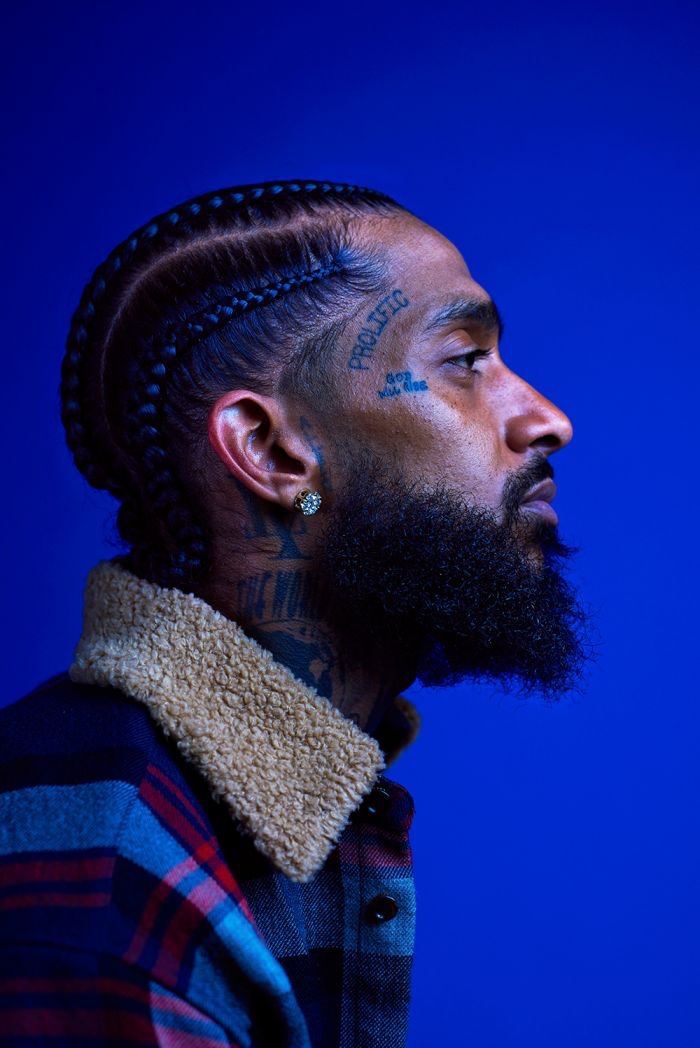
Unless you just don’t care or you’ve been under a rock all week, you know the tragedy that happened on Sunday (March 31, 2019). There are too many superlatives to list that describe Ermias Joseph Asghedom (known to the world as Nipsey Hussle). Now I’m not here to claim that I knew this man, I’m not even claiming to be a fan of his music. He existed on the periphery of my consciousness. I was cognizant of what he was doing in the world and respected the hell out of the message he was putting out into the world. But when my girlfriend called me and told me of his untimely demise, I couldn’t help but cry.

I didn’t cry when ‘Pac died. I didn’t cry when B.I.G died. I did shed tears for Michael and Prince. I’ll probably cry whenever Hov leaves this mortal realm. And these are probably my 5 favorite artists of all time. But here’s a man who I couldn’t name more than 2 songs by him, yet I cried like I had lost a family member. I turned on his music, pulled a hat down low over my eyes, and grieved for a man that I had never met.

Then, like most of us did, I jumped on social media to post something that could potentially display the hurt I was feeling. And that first night, it was beautiful. People posted links to songs, pictures, etc. showing their respect for Nipsey. But after that, the shit got twisted. Since Sunday night, wild conspiracy theories and videos of his last moments have ran rampant all over social media. We’ve become so focused on his death that we’re ignoring his life.

I’ve taken the past few days to really look into what this man was doing with his life and platform. He was preaching black empowerment in a way that our community hasn’t seen or heard since Malcolm X laid down. This is what our focus should be on. Not how or why he lost his life. Lift up his legacy, don’t sensationalize his death.

That’s all I got for y’all today. Peace and love. Let’s run this marathon! #RIPNipsey