Lost Ones

The bathroom light was still on. It hummed faintly behind the closed door, a thin strip of yellow spilling across the hallway carpet. Four plastic tests lay on the sink counter, lined up like tiny white verdicts. All of them said the same thing. Positive.

Lena stared at them until the word blurred. Her hands were trembling—not with fear, not exactly. It felt more like standing on the edge of something enormous and bright. Something terrifying and miraculous all at once. She pressed a palm to her stomach.

“Oh my God,” she whispered, and then she laughed—a small, disbelieving sound. “Oh my God.”

In the living room, Marcus was stretched across their secondhand couch, laptop balanced on his knees, a spreadsheet open. He was muttering under his breath about rent and hours and how his manager had cut his shifts again.

“Babe?” he called. “You okay in there?”

The bathroom door clicked open. Lena stepped out slowly, the tests clenched in her hand. Her face looked pale, but her eyes were shining in a way he hadn’t seen before.

Marcus sat up immediately. “Hey, what happened?”

She didn’t answer right away. She walked toward him like someone walking through water. Then she held out her hand.

“Well?” he asked, already bracing.

She held a pregnancy test out like evidence in a trial. “I’m pregnant.”

The word cracked through the room. He stared at the stick, then at her.

“Are you sure?”

Her laugh was sharp. “No, Marcus, I just collect positive pregnancy tests for fun.”

He winced. “That’s not what I—”

“I took four.”

Silence. For a split second, something like awe crossed his expression. Then it shifted. Tightened. His brain started calculating before he could stop it. Rent. Bills. His cut shifts. Her car that barely started in the mornings.

“Pregnant,” he repeated.

She nodded, a breathless smile breaking through. “We’re going to have a baby.”

Silence. Marcus swallowed. He set the laptop aside slowly, as if any sudden movement might shatter something fragile.

“Okay,” he said carefully. The smile on her face faltered.

“Okay?” she echoed.

He ran a hand through his hair. “I mean… okay. Wow. That’s… wow.”

She waited for him to stand. To pull her into a hug. To laugh. To say this is crazy and beautiful and we’ll figure it out. He didn’t. Instead, he leaned forward, elbows on his knees, staring at the carpet.

“How far along do you think you are?”

“I don’t know. Maybe five weeks? Six?” She hugged herself. “I missed my period and I just—I knew.”

He nodded slowly. Too slowly.

“Marcus,” she said, her voice thinning, “say something.”

“I’m trying.”

His mind was already racing ahead: rent due next week, the electric bill they were late on, the cracked windshield they still hadn’t fixed. His community college tuition. Her part-time job at the café that barely covered groceries.

“You look like someone just told you you’re going to prison.”

“Because this is serious, Lena!”

“It’s also exciting,” she shot back. “Or did that not cross your mind?”

He stood up abruptly. “Of course it crossed my mind! But do you want me to throw confetti? We can barely afford groceries!”

“We’ll make it work.”

“How?” His voice rose. “With what money? With what space? We’re in a one-bedroom apartment with mold in the bathroom!”

“So we move!”

“With what savings?!” he barked.

She flinched but didn’t back down. “People figure it out all the time.”

“Yeah, and they’re drowning half the time.”

“At least they try.”

He froze. “What’s that supposed to mean?”

“It means you’re already looking for an exit.”

“No I am not.”

“You haven’t said one single positive thing since I walked out of that bathroom.”

“Because I’m not an idiot, Lena!” he snapped. “This isn’t some Instagram announcement. This is eighteen years. Minimum.”

Her face hardened. “You think I don’t know that?”

“I think you’re romanticizing this.”

“Oh my God.” She threw the test onto the coffee table. “You think I’m stupid.”

“I think you’re emotional.”

Her jaw dropped. “Wow.”

“Don’t twist my words.”

“You just said I’m emotional.”

“You are!” he shot back. “You’re running on adrenaline and hormones and—”

“Say it.” She stepped toward him. “Say what you’re actually thinking.”

He hesitated.

“That we’re not ready,” he said finally.

“And?”

“And that maybe we should think about whether this is the right time.”

Her voice dropped to ice. “Whether what is the right time?”

He looked away.

“Say it, Marcus.”

He swallowed. “Whether we should… go through with it.”

The air left her lungs like he’d punched her.

“Go through with it,” she repeated. “You mean have your child?”

“I mean make a decision that doesn’t wreck our lives.”

Her eyes blazed. “So that’s what this is? A wreck?”

“You don’t even need to think about it?” she asked, voice trembling with disbelief.

“I am thinking about it!” he barked. “That’s the problem!”

“You mean you’re thinking about how screwed you are.”

“I’m thinking about how screwed we are.”

“No,” she shot back. “You’re thinking about yourself.”

He spun toward her. “Oh, that’s rich.”

“Is it?”

“Yes, it is! Because you’re acting like this is some miracle dropped from the sky instead of a disaster.”

“A disaster?” Her voice broke. “That’s what you think our child is?”

“I think it’s terrible timing!”

“You don’t get perfect timing!” she screamed. “Life doesn’t send you a calendar invite!”

He dragged his hands down his face. “We are twenty-two. We are broke. We fight about gas money. And now you want to bring a baby into that?”

She stepped closer, trembling. “I don’t want to bring a baby into it. The baby is already here.”

“It’s barely the size of a seed!”

“It’s still ours!”

He shook his head, backing away like she was something dangerous. “We have options.”

There it was again. Options. Her expression hardened into something almost unrecognizable.

“You mean an abortion.”

He didn’t answer.

“That’s what you mean.”

“I mean we don’t have to ruin our lives because of one mistake!”

The second the word left his mouth, he knew. Mistake. Lena stared at him like he had just slapped her across the face.

“Say that again,” she whispered.

“I didn’t mean—”

“Say it again.”

He didn’t.

“You think this baby is a mistake?” she asked, voice shaking with fury. “You think I am stupid enough to call it that?”

“I meant the situation!”

“No. You meant the baby.”

He looked away.

Her chest rose and fell rapidly. “My mom was nineteen. Nineteen. Everyone told her I was a mistake too.”

“I’m not everyone!”

“You sound exactly like them!”

He snapped. “Your mom struggled her entire life, Lena! You told me she cried in the kitchen because she couldn’t afford groceries!”

“And she still chose me!”

“And she never finished school!” he shot back. “She never got out of that crappy apartment!”

“At least she didn’t kill her kid to make it easier!”

The word hung there. Kill.

Marcus recoiled. “That’s not what I’m saying, Lena! Quit putting words in my mouth!”

“That’s what it feels like.”

“You don’t get to twist it into murder because I’m scared!”

“You don’t get to dress it up as logic because you’re selfish!”

He stepped forward, eyes blazing. “Selfish? You think I’m selfish for not wanting to drag a kid through poverty?”

“I think you’re selfish because you’re scared you’ll end up stuck.”

His jaw tightened. “You don’t know what it’s like.”

“No?” she fired back. “To have a dad who bailed? To grow up watching your mom do everything alone? No, I definitely don’t know anything about that.”

He pointed at her, shaking. “Do not compare this to him.”

“How is it different?”

“I am still here!”

“For now!”

That statement landed with the subtlety of an atomic bomb.

“For now?” he repeated. “What the fuck is that supposed to mean?!”

“You know what it means,” she said, tears streaming but voice vicious. “The second this got real, you were looking for a way out.”

“I’m trying to prevent a disaster!”

“You’re trying to erase responsibility!”

“I didn’t ask for this!”

He realized too late that he should’ve kept that to himself. The words were already out there, doing more damage than he could have imagined. Her face went white-hot.

“You didn’t ask for this?” she repeated slowly. “The fuck you mean you didn’t ask for this?!”

“You think I did this alone?” she demanded. “You think I got pregnant by myself?”

“That’s not what I—”

“You were there, Marcus. Every single time.”

He slammed his hand against the wall. “I know that!”

“Then stop acting like I trapped you!”

“I didn’t say that!”

“You don’t have to!” she screamed. “It’s all over your face!”

He stared at her, something ugly rising in him. “If you keep this baby—”

She froze.

“If I keep it?”

He swallowed, but he didn’t back down.

“If you keep this baby without thinking this through… don’t expect me to just pretend that I wasn’t against it.”

The room went silent.

“Are you threatening me, Marcus?” she asked quietly.

“I’m telling you I don’t know if I can do this. If we should do this.”

“There it is,” she said, voice hollow. “You’re leaving.”

“I didn’t say that.”

“You just did.”

He ran his hands through his locs, pacing like a trapped animal. “I am not my father.”

“Then prove it. Because from where I’m standing, you sure as hell look like him.”

“I’m trying!”

“No,” she said, tears cutting down her face. “You’re doing exactly what he did. Panicking. Looking for escape routes. Making it about how unfair it is to you.”

“Because it is unfair!” he exploded. “Everything was finally starting to feel stable!”

Her eyes went cold.

“So that’s it,” she said. “I’m chaos.”

“That’s not what I meant.”

“But it is.”

He felt something in his chest crack. “I am terrified I’m going to become him,” he admitted, voice raw. “That I’ll wake up one day and resent you. Or the kid. That I’ll look at our life and feel trapped.”

“And you think I’m not terrified?” she shot back. “You think I don’t know what it costs to do this, especially if I have to do it alone?”

The words echoed. Alone. They both heard it. He looked at her stomach. Then at her face.

“You’re really going to do this,” he said quietly.

“Yes.”

“Even if I’m not ready?”

“Yes.”

There was a long, awful pause.

“And if I can’t?” he asked.

Her voice broke, but she didn’t look away.

“Then you’ll just be another ain’t shit ass nigga who left.”

That did it. He grabbed his jacket off the chair.

“Where are you going?” she demanded.

“I need air.”

“Of course you do.”

“Don’t do that.”

“Don’t do what? Call it what it is?”

He stopped at the door, hand on the knob.

“I’m not him,” he said again, but it sounded weaker now.

She stood in the middle of the living room, one hand protectively over her stomach, the other shaking at her side.

“Then stop proving me right.”

He hesitated. For half a second, it looked like he might come back. Like he might choose to not follow his father’s footsteps and stay. Instead, he opened the door and stepped out into the night, letting it slam behind him.

The apartment felt enormous without him in it. Lena stood there, alone, breathing hard, the echo of the door still ringing in her ears. In the bathroom, the light still hummed. On the sink, three other tests lay in a neat row. Positive. Damning.And suddenly, so was the silence.

The Crush

He loved every minute of her company. If only she knew he existed. That was the tragic poetry of it, really.

Evan Carter had spent thirteen years in the same classroom orbit as Lily Ramirez. Thirteen years of shared pencils, shared group projects, shared fire drills and field trips and fluorescent-lit mornings. From the sticky tables of kindergarten to the scuffed tile floors of senior year, she had been there: three seats to the left, two rows up, sometimes behind him, sometimes ahead. Always close enough to see. Never close enough to touch.

In kindergarten, she wore her hair in crooked pigtails and cried on the first day of school. He had offered her his blue crayon. She had taken it without looking at him.

In fourth grade, she beat him at the spelling bee. He’d clapped the loudest.

In eighth grade, she tripped during the relay race, and he ran back to help her up. She thanked him politely—“Thanks… Evan, right?”—and the way she said his name had kept him awake for three nights.

By junior year, Lily Ramirez had become the kind of girl teachers described as “bright” and classmates described as “out of your league.” She laughed easily, spoke confidently, and somehow managed to make even a wrinkled school hoodie look like it belonged on a magazine cover.

Evan, on the other hand, had perfected the art of invisibility. He wasn’t unpopular. He wasn’t awkward in any spectacular way. He was simply… there. The dependable lab partner. The quiet guy who got good grades. The one who said “nice shot” at basketball games but never took the shot himself.

He told himself it didn’t matter. Loving her quietly was enough. Being near her was enough. Until it wasn’t.

The realization came in March of senior year. Graduation banners were beginning to be hung in the hallways. College acceptance letters were discussed like trading cards. People who had known each other since they still believed in cooties were suddenly making promises about staying in touch.

Evan watched Lily at her locker, laughing with her friends, sunlight slipping through the high windows and catching in her hair. In a few weeks, she’d be gone—to a university two states away. And he would still be the boy who never said anything.

The thought hit him like a slammed locker door. If he didn’t try now, he would carry this silence for the rest of his life.

That night, he lay on his bed staring at the ceiling. What’s the worst that could happen? She says no. But another voice whispered: What if she doesn’t even know who you are? The idea terrified him more than rejection.

The next morning, he made a decision. Not tomorrow. Not after prom. Not at graduation when emotions were high and everything felt cinematic. Today.

He spotted her during lunch, sitting beneath the old oak tree near the edge of the courtyard—the same tree where their class had taken a group photo in second grade. She was alone, flipping through a book, sunlight dancing across the pages.

His legs felt like borrowed equipment as he walked toward her.

“This is it,” he said to himself. “This is the moment.”

“Hey, Lily.”

She looked up. And smiled. Not the polite smile she gave strangers. Not the distracted smile she gave teachers. A real one. Warm. Almost… relieved?

“Evan,” she said easily, as if she’d been saying his name her whole life. “I was wondering how long it would take you.”

His brain stalled.

“…What?”

She closed her book. “I’ve been in the same class as you since kindergarten. You really think I don’t notice when you’re staring at me during assembly?”

His face burned. “I— I wasn’t—”

“You were,” she said, amused. “And you always let me borrow your notes in math. And you always volunteer to be my lab partner when no one else does.”

“That’s because—” He stopped. There was no point pretending now. “Because I like you.”

The words hung between them, fragile and electric. She studied him, and for a terrifying second he thought he’d misread everything.

Then she laughed softly. “Evan, I’ve liked you since eighth grade.”

He blinked. “You… what?”

She shrugged, suddenly shy. “You ran back to help me when I fell during the relay race. Everyone else kept running. You didn’t.”

“That was just—”

“Kind,” she finished. “It was kind.”

Silence settled between them again, but it wasn’t heavy anymore. It felt like standing at the edge of something new.

“I kept waiting,” she admitted. “I thought you’d say something eventually.”

“I thought you didn’t know I existed.”

She tilted her head. “You’ve always existed to me.”

The simplicity of it made his chest ache.

He swallowed. “So… would you maybe want to go out with me? Before graduation? There’s that little café downtown—you know, the one with the fairy lights?”

Her smile widened. “I was hoping you’d ask.”

“Is that a yes?”

“That’s a yes.”

For a moment, neither of them moved. The world didn’t burst into applause. The sky didn’t shift colors. The bell didn’t ring at some perfect cinematic second. But something changed. Years of quiet glances and almost-moments crystallized into something real. As they stood up together, walking back toward the building, their shoulders brushed. And this time, neither of them pretended it was an accident.

Sometimes love isn’t about grand gestures. Sometimes it’s about finally finding the courage to say what’s been true all along. And sometimes, the person you think hasn’t noticed you— has been waiting for you to speak all along.

The Secret Admirer

Her heart pounded as she looked at the card attached to the bouquet of flowers on her desk. The flowers were peonies: blush pink, her favorite, though she couldn’t remember ever mentioning that at work. The card was thick, cream-colored, and smelled faintly of ink and something warm, like cedar.

For the woman who always notices the light.—A.

She sat back in her chair, pulse loud in her ears. No last name. No explanation. Just the confident curve of the letter A.

Around her, the office hummed on: keyboards clacking, the copier groaning, someone laughing near the break room. No one seemed to notice that her world had tilted.

“Pretty,” her coworker Jenna said, leaning over the cubicle wall. “From who?”

“That’s the problem,” she said, forcing a smile. “I don’t know.”

That night, she replayed every recent interaction like a detective at a cork board. There was Mark from accounting, who lingered too long when he talked. There was Evan, her downstairs neighbor, who always held the door and asked about her day. There was even Daniel, her ex, who had an unfortunate habit of resurfacing when she least expected him.

The next day, another gift appeared. This time, a book she’d once loved in college, slipped into her tote bag sometime between her morning meeting and lunch. Inside the cover, in the same ink:

You looked happiest when you talked about this.—A.

Her skin prickled. Someone was paying attention. Really paying attention.

She began to notice things after that: small, unsettling things. Her coffee order waiting for her at the café before she’d reached the counter. A playlist emailed to her work address titled For the Commute Home, filled with songs she loved but never shared publicly. Notes appeared in places that felt too intimate: her windshield, her mailbox, once even tucked into the pocket of her coat. Always unsigned. Always thoughtful.

Her curiosity curdled into obsession. She watched reflections in windows, lingered in hallways, scrutinized smiles. Every kindness felt suspicious. Every glance lingered a second too long.

When the evidence began to point toward Evan, her neighbor, she felt a strange mix of relief and disappointment. He knew her routines. He could access her building. He fit, almost too neatly. She decided to test the theory. One evening, she mentioned, loudly, pointedly, that she hated lilies. The next morning, a single lily waited on her desk. Her stomach dropped.

That night, she knocked on Evan’s door, heart racing. When he answered, surprised and barefoot, she saw genuine confusion in his eyes as she accused him. He laughed, then stopped when he saw her face.

“I’m flattered,” he said gently, “but it’s not me.”

She went home shaking, certainty crumbling.

The following week, the messages grew bolder.

“You’re getting close,” one note teased.

“I like watching you think, “another said.

Fear threaded through her fascination now. She considered going to HR, to the police, but how could she explain that nothing explicitly threatening had happened? That someone was loving her from the shadows?

Then came the invitation. An envelope slid under her apartment door, heavy and final.

“I owe you the truth,” it read. “Tomorrow. 7 p.m. The park on Willow Street.”

She didn’t sleep.

At 6:55, she sat on a cold bench beneath a flickering lamppost, every sense sharpened. The park was mostly empty, dusk pooling between the trees. Footsteps approached. She stood. The man who stopped a few feet away was… ordinary. Mid-thirties, maybe. Brown jacket. Nervous hands. A stranger.

“I’m sorry,” she said immediately. “I think you have the wrong person.”

He swallowed. “I don’t.”

She stared at him, waiting for recognition that never came. “Do I know you?”

“No,” he said softly. “That’s the point.”

Her breath caught. “Then why?”

He took a careful step closer, stopping when she stiffened. “I work across the street from your office. Third floor. I see you every morning by the window before anyone else arrives. You always pause, just for a second, and look outside like you’re reminding yourself of something.”

Cold crept up her spine.

“I noticed,” he continued, voice trembling, “because I do the same thing. I started wondering who you were. Then I noticed the way you listen when people talk. The way you smile at nothing. I didn’t mean for it to go this far.”

“You followed me,” she said.

“I watched,” he corrected, then flinched. “I know how that sounds. I never wanted to scare you.”

“You did,” she said, steadier than she felt.

He nodded, shame flooding his face. “I won’t bother you again. I just… needed you to know it was real. That I was real. That it wasn’t a game.”

Silence stretched between them, heavy and complicated.

Finally, she said, “You don’t know me.”

“I know,” he said. “But I wanted to. Still do.”

He left then, disappearing down the path, not once looking back. She stood alone under the lamplight, heart still pounding, but differently now. The mystery was solved, yet nothing felt settled. Somewhere between being seen and being unknown, something fragile had broken open.

The next morning, there were no flowers on her desk. She found herself strangely aware of the window as she sat down, of the light beyond it, and for the first time, she didn’t look away.

The Divorce

Hearing his name, the young boy watched through the crack of the door as his parents argued. The light spilling from the living room cut across the hallway in a sharp line, and Michael crouched in its shadow, afraid even the sound of his breathing would give him away.

“Michael,” his mother said again, her voice sharp but trembling. “We can’t keep pretending. He deserves to know the truth.”

His father stood near the couch, shoulders tight, jaw clenched. “He’s only ten, Sarah. Ten. You want to rip his whole world apart?”

Michael’s small fingers curled against the wood of the doorframe. His name sounded strange in their mouths—like a stone being tossed back and forth. He didn’t understand every word, but the way they spoke told him enough. The air between them was heavy, like it had been all week, and every slammed door and sharp silence suddenly made sense in a way he didn’t want it to.

“Rip his world apart?” His mother’s voice cracked as she gestured wildly. “Do you think he doesn’t notice the slammed doors? The way you sleep on the couch? The cold stares at dinner? He already knows something’s wrong.”

Michael’s stomach flipped. He thought of the blanket his dad kept folded on the couch, smelling faintly of aftershave. He thought of the way his mom scrubbed the dishes harder than she needed to, her eyes on the sink as though it might swallow her.

His father’s voice lowered, thick with frustration. “So what then? We sit him down and tell him his family’s broken? That we can’t fix it?”

Michael leaned closer, pressing his cheek against the door to hear better. His mother stood rigid, arms crossed tightly across her chest, eyes wet and glinting. His dad’s face sagged, like someone had taken all the strength out of it.

Broken. Can’t fix it. Words too big and sharp for Michael’s ten-year-old chest. He slid down against the wall, curling his knees to his chest. His heartbeat thudded so loud he was sure they’d hear it.

He wanted to burst into the room, to tell them it didn’t matter if they fought, that they could still stay together. He wanted to crawl back into bed, pull the blanket over his head, and pretend none of this was real. He did neither. He just sat there, caught in the hallway between his parents’ world and his own.

Memories flickered through his mind like slides in the old projector his teacher had once used at school. His father pushing him on the swing at the park, calling out, Higher, Michael, higher! until the chains creaked and the world tilted with sky. His mother humming to him when he was sick, her cool hand smoothing his forehead. The three of them at the beach last summer, building a crooked sandcastle that fell into itself, and laughing until his sides hurt. Those people—the laughing parents, the ones who built castles with him—felt far away from the people behind the door now.

“Mark,” his mother whispered, her voice breaking. “He’ll survive the truth. But he won’t survive the lies.”

His father didn’t answer right away. He just sank onto the couch, covering his face with both hands. Michael’s chest tightened. He hated when his dad looked like that—defeated, smaller somehow. Dads were supposed to be strong, supposed to fix things. His mom was supposed to make things better. But tonight, neither of them seemed able to. The boy pressed his forehead to his knees, wishing the carpet would swallow him whole.

The argument faded into muffled words—phrases he couldn’t quite catch anymore. He only heard the rise and fall, the edges of anger, the sudden pauses that meant someone had run out of breath.

When footsteps moved toward the hallway, Michael scrambled silently to his feet and darted into his bedroom. He slipped under the covers, pulling them up to his chin, squeezing his eyes shut as though sleep could protect him. The door to his room opened a crack. Light spilled across the floor, thin and fragile. His mother’s voice drifted in, quiet and tired.

“Goodnight, sweetheart,” she whispered.

Michael didn’t answer. He kept his eyes closed, his breathing steady, pretending. The door shut softly.

In the silence that followed, Michael stared at the ceiling. The shadows looked different tonight, stretched and twisted, like they knew something he didn’t. He tried to remember how his dad had tucked him in last week, making silly monster noises as he pulled the blanket tight. He tried to remember how his mom’s laughter used to fill the kitchen when his dad danced badly on purpose.

But the more he tried to hold on, the blurrier those memories became. Eventually, his eyes grew heavy, though sleep didn’t bring comfort. In his dreams, he was standing on a bridge that split down the middle, his parents on either side, calling his name. No matter where he turned, he couldn’t reach them both.

When morning came, Michael would wake to the same crack in the family, wide enough for him to see through—but not wide enough for him to fix.

Michael sat in his usual spot, legs dangling above the floor, swinging slowly back and forth. His mother set a bowl of cereal in front of him, but he didn’t touch it. The spoon lay across the rim like a silver line he couldn’t cross.

The morning light through the window was too bright, falling across the cracked linoleum in squares. Normally, he liked mornings—the smell of toast, the hum of the coffeemaker, his dad reading the paper while his mom hummed. But today was different. His dad wasn’t reading anything. His mom wasn’t humming. They sat across from him, staring at him in a way that made his stomach twist.

He knew. He had known last night, listening through the crack in the door. But now, with them on either side of the table, the knowing felt heavier, like something pressing down on his chest.

“Michael,” his mother began, her voice soft and careful, as though she were carrying a fragile glass that might shatter if she spoke too loudly.

He stared at the bowl of cereal. A thin crack ran down the side, so small he had never noticed it before. He wondered how long it had been there. Maybe the bowl had always been broken, and he just hadn’t seen.

His father cleared his throat. “Buddy, your mom and I—we need to talk to you.”

Michael’s throat felt dry. He wished he could run back to his room, dive under the covers, and never come out. But his legs stayed still, swinging back and forth, like they belonged to someone else.

“We love you,” his mother said quickly, reaching across the table as though the words might shield him. “Nothing will ever change that.”

Michael nodded, though he didn’t understand how love could sit in the same room as all the slammed doors and angry whispers.

His father leaned forward, hands clasped tightly, knuckles pale. “Sometimes… sometimes grown-ups can’t make things work the way they want them to. We’ve tried, Michael. We’ve really tried. But…” His words trailed off like a boat drifting away.

Michael’s gaze stuck on the crack in the bowl. The cereal inside had gone soggy, little islands sinking in pale milk. He didn’t want to hear the end of the sentence. He already knew it.

“But we’ve decided it’s better if we live in different houses,” his mother said, finishing for him. Her voice trembled, but she forced a smile that looked nothing like the ones she used to wear.

Michael’s stomach lurched. Different houses. The words sounded like a door slamming shut forever. He wanted to shout no, to pound his fists against the table until they took it back. But his throat locked. His fingers dug into his knees under the table, hard enough to leave little crescents.

“It’s not your fault,” his dad said firmly, as though he could see the storm behind Michael’s silence. “This has nothing to do with you.”

Michael looked up, eyes stinging. “Then why—” His voice cracked. He swallowed hard. “Why can’t you just stop fighting?”

His mother blinked quickly, tears threatening. “Oh, honey, it’s not that simple.”

“It should be,” Michael whispered. He wanted it to be as easy as putting two puzzle pieces back together, as easy as saying sorry.

His father reached across the table, but Michael pulled back, folding his arms.

“We’ll both still see you,” his mother said quickly. “You’ll have two homes. Two rooms. We’ll make sure you’re okay, Michael.”

Two homes. Two rooms. It sounded like splitting him in half. Michael shoved the bowl away, the spoon clattering against porcelain. Milk sloshed onto the table, seeping toward his father’s hands. Nobody moved to wipe it up. Silence filled the kitchen, thick and heavy. The clock on the wall ticked, each second stretching longer than the last.

Finally, Michael muttered, “I don’t want two homes. I just want one.”

His parents exchanged a look across the table. The kind of look grown-ups thought kids didn’t notice, but Michael noticed everything now.

“Sometimes,” his father said softly, “one home isn’t enough to keep everyone safe. Sometimes two is better, even if it doesn’t feel that way right now.”

Michael stared at him, not understanding. He didn’t feel safer. He felt like the floor had cracked open and swallowed him whole.

His mom reached out again, brushing his hand this time. He didn’t pull away, though he wanted to. “We’re still your family,” she whispered.

Michael’s eyes burned. He kept staring at the crack in the bowl, thinking how it still held milk even though it was broken. Maybe families worked that way too. But he wasn’t sure.

The conversation stretched on, words blurring together: “visitation,” “weekends,” “lawyer.” Grown-up words that meant nothing to him, except that everything was changing.

When it was over, he slipped away from the table without finishing his cereal. Upstairs in his room, he shut the door and lay on his bed, staring at the ceiling.

The cereal bowl sat downstairs, cracked but unbroken, holding its soggy remains. Michael wondered how long it would last before it shattered completely.

Michael hovered by the stairs, hugging the banister. His dad was crouched beside the suitcase, folding shirts with a precision that didn’t look like him at all. Usually, his dad crammed clothes into drawers until they stuck out the sides. Today, each shirt was a neat square, stacked carefully inside the suitcase as though neatness could make the leaving easier.

Michael’s throat felt tight. He wanted to shout don’t go, but the words stuck.

“You’ll come stay with me this weekend, buddy,” his dad said without looking up. His voice was warm, steady, but it carried something underneath. Something brittle.

Michael nodded, though he didn’t understand why weekends had to be different from weekdays. Weren’t weekends just the same days without school? Weren’t they still supposed to belong to all of them together?

His mom stood in the kitchen doorway, arms folded across her chest. She looked tired, her face pale. She didn’t say anything, just watched.

The zipper scraped shut. The sound made Michael flinch.

At school the next day, Michael sat at the edge of the playground while the other kids played tag. He picked at the gravel, digging out little gray stones, lining them up in rows.

“Hey, Michael, wanna play?” a boy from his class asked, breathless from running.

Michael shook his head. “I’m tired.”

The boy shrugged and ran off.

Michael dug harder, nails scraping dirt. He wanted to tell someone—his best friend Josh, maybe—that his dad had packed a suitcase, that his mom’s smile had disappeared. But the words felt too heavy, too embarrassing, like a secret stamped on his forehead.

When the bell rang, he shoved the stones into his pocket, as if carrying something broken might help him understand his own.

His dad’s new apartment smelled like fresh paint and emptiness.

Michael stood in the doorway, backpack slung over his shoulder, looking at the white walls. No pictures. No toys. Just a couch, a TV on the floor, and a mattress in the corner.

“Well,” his dad said, clapping his hands together too loudly. “What do you think?”

Michael stared. “It doesn’t look like home.”

His dad’s smile faltered. “We’ll fix it up, don’t worry. I’ll get you your own bed. Posters for the walls. Maybe a game console.”

Michael nodded politely, though all he could see was the bare lightbulb hanging from the ceiling. Home didn’t have bare lightbulbs. Home smelled like his mom’s cooking and felt warm even when it was cold outside.

That night, he lay on the couch under a scratchy blanket while his dad snored softly from the mattress. The shadows on the ceiling looked different here—longer, sharper. He clutched his stuffed dinosaur to his chest and closed his eyes.

But he didn’t sleep much.

The weeks slid by in halves. Five days with Mom, two days with Dad. Back and forth, like a ball being tossed between them.

At his mom’s house, the air felt heavy but familiar. She made spaghetti on Wednesdays, kissed the top of his head when he did his homework. Sometimes, late at night, he heard her crying in the bathroom, the water running to hide the sound.

At his dad’s apartment, everything felt temporary. They ate takeout most nights. His dad tried too hard, asking if he wanted ice cream, if he wanted to watch movies, if he wanted to stay up late. Michael said yes to everything, but the hollow feeling didn’t go away.

At school, Michael’s teacher noticed.

“Michael,” she said one afternoon, crouching beside his desk. “You seem distracted lately. Is everything alright at home?”

Michael shrugged, eyes glued to his math worksheet. The numbers blurred together.

“Do you want to talk about it?” she asked gently.

“No,” Michael whispered.

She didn’t push, just patted his shoulder. But he felt the weight of her question all day, like she could see the cracks he was trying to hide.

That night, when his mom asked if he had homework, he snapped at her. “Why do you care?!”

The words spilled out before he could stop them. Her face crumpled, and guilt twisted in his chest. He wanted to apologize, but the anger burned too hot. He stormed off to his room, slamming the door hard enough to make the picture frames rattle.

The next weekend, at his dad’s apartment, Michael sat on the floor drawing. He sketched his mom, his dad, and himself standing together in front of their old house. He drew smiles on their faces, even though the memory didn’t feel real anymore.

When his dad saw the picture, he crouched down. “That’s great, buddy.”

Michael hesitated. “Can’t we… can’t we just go back? To when it was all of us?”

His dad’s smile faded. He pulled Michael into a hug, holding him tight. “I wish we could. But some things… they just don’t go back the way they were.”

Michael buried his face in his dad’s shirt, hot tears soaking the fabric. His dad didn’t let go, even when his own shoulders shook.

Later, lying in bed at home, Michael thought about the cereal bowl again. The crack in its side. It hadn’t broken yet, but it would someday. He knew it.

And when it did, no amount of milk or cereal would make it whole again.

Michael had a plan. It started with crayons.

One Saturday morning at his dad’s apartment, he spread his art supplies across the floor. The crayons rolled across the carpet, bright sticks of possibility. He drew carefully—his mom, his dad, and himself, standing in front of their old house. He gave them wide smiles, bigger than the ones he remembered. His dad’s arm around his mom’s shoulder. His mom’s hand resting on his own. A family that still fit together.

When he was done, he held the paper proudly. “We can put it on the fridge,” he said.

His dad crouched beside him, smiling faintly. “That’s great, buddy. You really captured us.”

Michael’s chest swelled. “You should give it to Mom. Then she’ll know we’re still a family.”

His dad froze. The smile lingered, but it didn’t reach his eyes. “I don’t think that’s how it works, Michael.”

Michael’s stomach tightened. He shoved the drawing into his backpack anyway. Maybe his dad didn’t get it—but his mom would.

That Sunday evening, back at his mom’s house, Michael unpacked the drawing and slapped it onto the fridge with a magnet.

“Look,” he said proudly.

His mom turned from the stove, wiping her hands on a towel. She bent down, studying the picture. “It’s beautiful, sweetheart.” Her voice was soft, but her smile wavered at the edges.

“You like it?” he asked.

“Of course,” she said, pressing a kiss to his hair. But when she turned back to the stove, her eyes glistened.

Michael stared at the picture. For a moment, he thought he saw the lines blur—the three smiling figures shifting, slipping away from each other. He blinked hard. It stayed the same.

The next week, Michael tried harder.

At school, he finished all his homework neatly. He raised his hand in class. He even held the door open for the teacher, earning a smile.

At home, he did the dishes without being asked. He kept his room spotless, lining his action figures in perfect rows along the shelf.

At his dad’s, he didn’t complain once about the scratchy blanket. He laughed at his dad’s bad jokes, even when they weren’t funny.

Maybe, he thought, if he was perfect, they would stop fighting. Maybe they’d look at him, proud and happy, and remember what it felt like to be together.

But the silences at dinner stayed sharp. The phone calls between them were short and cold.

Perfection wasn’t enough.

One Friday night, he begged them both to come to his soccer game.

“Please,” he said on the phone with his dad. “Mom’s coming. You should too. We can all sit together.”

There was a pause. Then his dad said, “I’ll try, buddy.”

Michael clung to those words. I’ll try.

At the game, he scanned the bleachers. His mom waved, bundled in a scarf. Relief flooded him. He turned, searching.

Minutes later, his dad appeared, hands shoved into his jacket pockets.

Michael’s heart leapt. They were both here.

He kicked the ball harder than ever, racing down the field, imagining his parents cheering together. He scored a goal, the ball thudding into the net. He turned, grinning, expecting to see them both clapping.

But his dad sat at one end of the bleachers. His mom sat at the other. A gulf of empty seats stretched between them.

Michael’s grin faltered.

After the game, they avoided each other, each pulling him aside separately to say “Good job.” Their words overlapped but never touched.

The victory felt hollow.

The breaking point came two weeks later.

It was a Saturday morning at his dad’s. Michael had been saving his allowance, hoarding dollar bills in a shoebox. He tugged it out now, spilling the crumpled bills across the floor.

“What’s all this?” his dad asked.

“I’m gonna buy flowers for Mom,” Michael said firmly. “If I give her flowers, she won’t be sad. And then you can come over, and we can all eat dinner together.”

His dad’s face crumpled. “Michael…” He rubbed his eyes. “Flowers won’t fix this.”

“Yes, they will!” Michael snapped, stuffing the money back into the box. His chest heaved. “You’re not even trying!”

His dad knelt, trying to touch his shoulder, but Michael shoved him away. Tears blurred his vision.

“You’re supposed to fix it,” Michael shouted. “Both of you! You’re the grown-ups, not me!”

The room rang with his words. His dad looked stunned, as if someone had struck him.

Michael fled to his room, slamming the door, burying his face in the pillow. The sobs came hard, tearing through him.

For the first time, he let himself think what he had been avoiding all along: Maybe nothing he did could glue them back together.

That night, as he lay awake, he thought about the cereal bowl again. The crack running down its side. He had hoped his drawings, his good behavior, his perfect grades could hold the pieces together. But cracks didn’t disappear just because you wanted them to.

He pictured the bowl slipping from the table, shattering into pieces too sharp to touch.

And in the silence of his dad’s apartment, Michael realized he was terrified that’s what would happen to his family next.

The handoff always felt like a tug-of-war.

Michael stood on the porch with his backpack, clutching the straps so tightly his fingers ached. His mom stood beside him, arms folded, lips pressed into a thin line. His dad waited at the curb, leaning against his car, hands shoved deep into his jacket pockets.

It should have been simple—just a ride from one house to the other. But every week, the air between his parents grew heavier, thicker, like storm clouds ready to burst.

“Don’t forget he has a math test on Monday,” his mom called.

“I’ve got it,” his dad replied, his voice flat.

“And he needs his soccer cleats. Did you pack them?”

“Yes, Sarah. I know how to pack a bag.”

Michael glanced between them. Their words snapped like brittle sticks, breaking over his head. His stomach twisted. He wanted to shout stop, but his voice stayed trapped inside his chest.

His dad reached for the backpack. His mom held onto it a second too long.

“Don’t forget,” she said tightly, “he still prefers the nightlight when he sleeps.”

“I think I know my own son,” his dad snapped.

The tug on the backpack yanked Michael forward. He stumbled, caught between them.

“Stop!” he blurted. His voice cracked, high and desperate.

Both parents froze, eyes snapping to him.

Michael’s chest heaved. Heat rushed up his neck. “I’m not a suitcase!” he shouted. “You don’t get to just pull me back and forth like I’m—like I’m—” His throat closed. Tears blurred his vision.

“Buddy—” his dad began, but Michael cut him off.

“No! You don’t listen! You don’t care what I want! You just yell at each other and—and you don’t even see me standing here!”

His mom’s face crumpled. “Sweetheart, we—”

“You’re supposed to fix it!” Michael’s fists pounded against his chest. “You’re the grown-ups! But you don’t even try anymore!”

The words tumbled out faster than he could stop them. “I draw pictures, I do all my homework, I scored a goal at soccer, and you didn’t even sit together! You just sit apart like strangers! And I thought maybe—maybe if I was perfect, you’d want to stay together, but it doesn’t matter, does it? It doesn’t matter what I do!”

Silence swallowed the porch. His parents stared at him, stricken.

Michael’s breath came in ragged gasps. His face burned hot, tears streaming down his cheeks. For a moment, he thought he might throw up.

Then his legs moved before he knew what he was doing. He bolted down the sidewalk, sneakers slapping against the pavement, backpack bouncing.

“Michael!” his mom cried.

“Buddy, wait!” his dad shouted.

But Michael didn’t wait. He ran. Past the corner store, past the playground, until his lungs burned and his legs felt like rubber. He ducked into the small park near school, collapsing onto a swing.

The chains creaked as he rocked slowly, dragging his toes in the dirt. His chest hurt with every breath.

For a long time, he just sat there, listening to the wind in the trees. He felt small, like the world had stretched too big around him.

He didn’t know how long he sat before footsteps crunched on the gravel.

“Michael?”

His dad’s voice. Tentative. Careful.

Michael hunched his shoulders, refusing to look up.

A moment later, his mom appeared too, her face pale and blotchy. They stood a few feet away, uncertain, as though the space between them was a wall neither could cross.

Michael wiped his nose with his sleeve. “Why can’t you just stop fighting?” His voice was hoarse, cracked.

His mom knelt in the dirt. “We’re sorry, sweetheart. We didn’t realize how much we were hurting you.”

“Yes, you did,” Michael muttered. “You just didn’t care.”

His dad crouched too, his knees popping. “That’s not true. We care more than anything. We just… we didn’t know how to do this right.”

Michael kicked at the dirt, sending up a puff of dust. “Then figure it out. I don’t want two families. I want one.”

His mom’s eyes filled with tears again. “We can’t be one family the way we used to be. But we can still be your family. We can still work together. We just… have to learn how.”

Michael looked between them. They weren’t standing side by side. They weren’t holding hands. The space was still there.

But for the first time, their voices weren’t sharp. They weren’t using him as a rope in their tug-of-war.

His dad reached out, resting a tentative hand on Michael’s shoulder. “We’ll do better. I promise.”

His mom nodded. “We’ll try, sweetheart. Really try.”

Michael’s chest still ached. The hurt didn’t vanish. But something inside him loosened, just a little.

He let the swing creak forward, then back, the chains groaning. The world was still broken, the crack still running down the middle of everything. But maybe, just maybe, the pieces didn’t have to cut him as badly anymore.

That night, back at his mom’s house, Michael sat on his bed, hugging his stuffed dinosaur. He thought about the cereal bowl again—the one with the crack in its side.

It hadn’t shattered yet. Somehow, it still held together, even if it wasn’t perfect.

Maybe families could be like that too.

The next weekend felt different.

When his dad pulled into the driveway, the engine idled quietly instead of roaring with impatience. His mom stepped out onto the porch, but her arms weren’t crossed this time. She gave a small wave, hesitant but real.

Michael watched from the window, clutching his backpack. For the first time in months, the air between his parents wasn’t buzzing with static. It wasn’t warm either—but it was calm.

“Ready, buddy?” his dad asked when Michael came out, opening the car door for him.

Michael nodded. He glanced back at his mom. She smiled, tired but steady. “Have fun,” she said.

And for once, it didn’t feel like a warning.

At his dad’s apartment, there was a new lamp in the corner and a small desk pushed against the wall. On the desk sat a framed picture of Michael at last year’s school play, wearing a paper crown.

“You did this?” Michael asked, surprised.

His dad rubbed the back of his neck. “Yeah. Thought it might help this place feel more like yours, too.”

Michael traced the edge of the frame with his finger. The photo wasn’t new—it had been on the mantle at home once. Seeing it here felt strange, but also… safe, like a piece of his old life had made the journey with him.

That night, they cooked spaghetti together instead of ordering pizza. Michael stirred the sauce while his dad pretended to be an expert chef, tossing imaginary seasoning into the air. It wasn’t the same as home, but it was theirs.

Back at his mom’s house during the week, things were quieter too. She still looked tired sometimes, but the sharp edges of her voice had softened. She let Michael help with the laundry, and they laughed when a sock clung to his shirt with static.

One evening, he caught her on the phone with his dad. The conversation was short, but calm. “He has a field trip Friday… Yes, I’ll send the permission slip in his bag… Okay. Thanks.”

No shouting. No slamming phones. Just words. Ordinary words.

Michael stood in the hallway, listening, and felt something unclench inside him.

At school, he started sitting with Josh again at lunch.

“You wanna trade cookies?” Josh asked, holding out a chocolate chip.

Michael hesitated. For weeks, he had avoided these small exchanges, afraid his secret would slip out. But now, he found himself nodding.

“Sure,” he said, handing over a sandwich cookie.

It wasn’t much. But it felt like breathing again.

The real test came one Saturday afternoon.

It was his birthday.

Michael had dreaded it for weeks, imagining two separate parties, two separate cakes, two different songs of Happy Birthday sung off-key in two different rooms. But when he came downstairs, he found one cake on the table—and both his parents in the kitchen.

His heart lurched.

His mom was lighting candles, her hands steady. His dad stood nearby, holding a stack of plates. They weren’t standing together, but they weren’t apart either.

“Surprise,” his mom said gently.

“Happy birthday, buddy,” his dad added, smiling.

The candles flickered. Michael stared at them, waiting for the fight, waiting for the sharp words. But none came.

“Make a wish,” his mom said.

Michael closed his eyes. For a moment, he didn’t know what to wish for. The old wish—that they’d go back to being the way they were—felt too heavy now, too far away.

Instead, he wished for something smaller. That they’d keep trying. That the calm would last.

He blew out the candles in one long breath.

That night, after the cake was gone and the plates were washed, Michael sat in his room with his stuffed dinosaur tucked under his arm.

He thought about the crack in the cereal bowl. It was still there in the cupboard—he had seen it that morning. Still holding together, despite everything.

Maybe cracks didn’t always mean the end. Maybe they just meant things had to be handled more carefully.

Michael lay back on his bed, staring at the ceiling. The shadows still stretched and shifted, but they weren’t as frightening as before.

His family wasn’t the same. It might never be. But as he drifted toward sleep, he realized something new: different didn’t always mean broken beyond repair.

Sometimes, it just meant learning to breathe again.
The First Dance

He awkwardly placed his hands on her waist. This was the first of many dances to come. The gym glowed under strings of fairy lights, their faint hum drowned out by the bass thump of a slow song. Crepe paper streamers swayed lazily in the warm air, and the sweet scent of punch mingled with the sharp tang of hairspray. Ethan’s palms were clammy as he tried not to grip her too tightly.

Lily tilted her head up, her hazel eyes catching the light like shards of amber. A teasing smile tugged at her lips.

“You can relax, you know,” she murmured. “I’m not going to bite.” A nervous laugh tumbled out of him. “Sorry. First-dance nerves.”

“You’re doing fine.” Her voice was low and steady, as if she’d been here a hundred times before. But truthfully, she hadn’t. Lily had turned down every boy who asked her to the fall formal. Except Ethan.

“Do you think you’ll remember this?” she asked, her words a soft challenge.

He blinked. “This? Like, this dance?”

She nodded. “Sometimes I wonder if moments like these just… fade.”

“I won’t forget,” he said. The earnestness in his voice surprised even him.

A slow, private smile spread across her face. “We’ll see.” The song changed, but she didn’t pull away. Neither did he.

It began with calculus, but their first real date came two weeks later at a small coffee shop on Main Street. Ethan had rehearsed the invitation a dozen times. In the end, it escaped his lips in a clumsy rush between derivatives and integrals.

“Do you want to, um… get coffee? Sometime?” Lily raised an eyebrow, her grin playful. “Just coffee?”

“Well… coffee and, like… hanging out. Not tutoring. A… date.”

“You’re lucky you’re cute when you’re nervous.”

“Is that a yes?”

“That’s a yes.”

On Saturday, Ethan arrived ten minutes early and sat in his car, gripping the steering wheel like a lifeline. When Lily walked through the door—her hair tucked into a loose braid, her sweater soft and cream-colored—he nearly forgot to breathe.

“You didn’t have to get here so early,” she teased, sliding into the seat across from him.

“I wasn’t that early,” he lied.

“You’re terrible at lying,” she said, her grin widening.

Conversation stumbled at first, then flowed like a river. She spoke of her photography hobby, her little brother’s dinosaur obsession, and how her mother played Earth, Wind & Fire records on Sunday mornings.

“I like listening to you talk,” Ethan said, surprising himself.

“You’re full of surprises,” she replied softly, her cheeks tinged pink.

They left the coffee shop long after the sun had set, walking slowly through the crisp December air. At her driveway, Ethan hesitated.

“Thanks for today,” he said.

“Thanks for asking.”

She kissed him then—light as snowfall, her mittened hands brushing his jacket. When she pulled away, her smile lingered.

“See? That wasn’t so scary.”

Ethan didn’t remember the drive home, only the warmth that spread through his chest and refused to fade.

By February, Ethan was spending Saturday afternoons at Lily’s house. Her mother welcomed him warmly, offering cookies and asking about his classes. Her father, though polite, kept shooting Ethan subtle, measuring looks—like a man deciding whether to hand over something fragile and irreplaceable.

“Relax,” Lily whispered in the kitchen. “He likes you. He’s just… protective.”

“Of course he is,” Ethan said. “You’re… you.”

She gave him a puzzled look. “What does that mean?”

“You’re the kind of person people protect,” he said softly. For once, Lily—bright, confident Lily—blushed.

By spring, cracks appeared.

“You’re really bailing on me for another basketball practice?” Lily’s voice was sharper than he’d ever heard it.

“It’s not like I want to,” Ethan said. “Coach is on my case about missing even one. The tournament’s in two weeks.”

“Yeah, but we were supposed to study together tonight. You promised.”

“I’ll make it up to you. I swear.”

“That’s what you said last time.”

The words hovered in the air like a storm cloud.

“I’m trying, Lily. I just—”

“I know,” she sighed. “It’s just… sometimes it feels like I’m not as important as everything else.”

“You are. You’re the most important,” he said quickly.

“Then show me.”

Two days later, he skipped practice, showed up at her door with takeout and a rented movie.

“You’re lucky I’m forgiving,” Lily said as they settled on the couch, her voice softening.

“Or maybe I’m learning,” Ethan replied.

In July, they lay on the hood of Ethan’s car, the metal warm beneath their backs, the night sky sprawling endlessly above them.

“Do you think we’ll still know each other in ten years?” Lily asked. He turned his head to study her profile, the curve of her nose lit faintly by starlight. “What kind of question is that? Of course we will.”

“People change.”

“Then we’ll change together.”

“You’re such an optimist,” she murmured.

“I’m a realist. And the reality is—I don’t ever want to stop knowing you.”

She didn’t answer right away. Instead, she reached for his hand, their fingers weaving together. “Me neither.”

By senior year, they were inseparable. Lily’s acceptance letter to her dream university arrived in January. Ethan smiled for her, hugged her tight, but later that night he lay awake, staring at the ceiling. She’d be three hours away.

“You’re quiet,” Lily said one afternoon, tracing lazy circles on his palm.

“Just thinking,” Ethan admitted.

“About?”

“Next year.”

She sighed. “It’ll be hard. But not impossible.”

“I don’t want to lose this.”

“You won’t. Not if we don’t let it happen.” He nodded, trying to believe her.

At prom, they danced again. This time, Ethan wasn’t nervous. His hands rested confidently on her waist, and her arms curled around his neck.

“Remember our first dance?” Lily whispered.

“How could I forget? I nearly tripped over my own feet.”

“You’ve improved.”

“I had a good teacher.”

She laughed, the sound low and warm, then rested her head against his shoulder. This would be their last high school dance. In a few months, they would walk across a stage in black gowns and caps. She would pack her life into boxes. He would stay behind for a year, working and taking classes at the community college before transferring.

The thought made his chest ache. But as the music swelled around them, neither of them spoke of the future. There would be time for that.

Tonight, there was only them, the slow rhythm of the song, and the warmth of each other’s hands. This was the first of many dances to come.

On graduation day, they found each other in the swirl of caps and gowns and proud families.

“Guess this is it,” Ethan said softly.

“Not ‘it,’” Lily corrected. “Just… a new beginning.”

“You’re better at this whole optimistic thing than I am.”

“See? I’m rubbing off on you.”

When it was time to say goodbye for the summer, Ethan hugged her tight.

“We’ll figure it out,” Lily whispered.

“I know,” he said. “We’ve got plenty more dances left.” And he believed it.

The Sleeper

Every time I fall asleep, one year passes until I wake up again. It started on my 18th birthday. That night was ordinary—cake with too-sweet frosting, laughter echoing off the kitchen walls, a wish made over flickering candles I barely remember. I went to bed thinking about college applications and crushes, about leaving town and starting something new. I closed my eyes with the weightless hope of youth and opened them to find the calendar read June 20, 2024.

My room was dustier. The posters on the wall had faded to ghosts of their former selves. The vines outside my window had crept deeper into the cracks of the siding, pulling the house back toward the earth. I stumbled into the kitchen, heart pounding, and found news clippings on the fridge: Local Teen Still Missing, Presumed Dead. My name. My face. My family frozen in an old photo, smiling like we hadn’t yet fractured. I thought it was a dream. It had to be. But then I blinked—and the world spun forward again.

I’ve tried everything—staying awake for days, flooding my body with caffeine until my hands shook, tying myself to doorframes, sleeping in hospital lights. But it always comes. That moment when my body betrays me. When exhaustion wins. And when I wake… the world is one year older.

My parents grieved, then grew distant. My mother’s hair grayed, my father’s eyes dulled. My friends moved on, their lives arcing forward while mine stuttered like a skipped record. Technology surged ahead. Fashion shifted. The slang changed. Seasons lost their rhythm—summer felt like winter, spring was hot and wrong. The sun started rising at odd angles, like even it was tired of keeping time.

By my twenty-fifth wake-up, the world had grown quieter. Cities had begun to erode. Streets cracked and were swallowed by roots. Trees leaned harder into broken buildings. My childhood home was boarded up, condemned. I wandered the neighborhood like a ghost until a neighbor—one of the few who hadn’t moved or died—spotted me.

“You haven’t aged a day,” he whispered, backing away like I was a specter. “They say you’re cursed.”

He wasn’t wrong. Eventually, I stopped trying to explain. You can only tell someone you’re a walking paradox so many times before the disbelief calcifies into fear. Instead, I began to plan my years like missions. I left letters in library books, hid instructions in vaults only I knew how to open, buried messages under stone. I studied languages. I watched how the world tilted—how solar flares impacted climate, how artificial intelligence reshaped the economy, how the sky itself sometimes flickered. I learned to garden. Not because I’d ever see the bloom, but because I wanted to leave something living behind.

Then, on my thirty-second wake-up, I met Aria. She was standing in front of an abandoned bookstore, painting a mural of a phoenix wrapped in clock gears. I watched her for an hour before she turned and said, “You look lost. Or late.”

She believed me—without flinching. Called me her Rip Van Winkle with a clockwork heart. She asked questions no one had before: What do you miss the most? Have you ever left something behind on purpose?

That day, we built a capsule together—filled it with pieces of our lives: her sketchbook, a photo of us, my notebook scrawled with maps of possible futures. We buried it under the old bell tower, sealing it with a promise: if we found each other again, we’d dig it up.

The next time I woke, she was gone. Only a note remained, brittle and faded like old leaves: If you ever wake again, find me in Florence. That was twenty-four wake-ups ago.

I’ve searched across continents. Florence, Italy first—then Florence, Oregon. Every Florence I could find. Some didn’t exist anymore. Some had changed their names. But I searched anyway. I asked about her in dusty towns and sleek arcologies. I studied old security footage, traced murals, found fragments of the phoenix in back alleys and gallery ruins.

I’m almost seventy now, though I still look eighteen. My bones don’t ache, but my soul does. I’ve watched decades pass by the handful. I’ve outlived my friends, my parents, and the future I once imagined. But I haven’t stopped searching for her.

Tonight, as my eyes grow heavy, I hold her last note to my chest. The ink is nearly gone, but I’ve memorized every letter. I whisper her name like a prayer, willing my dreams to hold steady. Because maybe—just maybe—next year will be the one I find her. Or maybe next time I wake, the world will finally stop spinning without me.

The Observer

She didn’t want to be in love. Her kind fell in love only once, and heartbreak could be fatal. Yet, despite the warnings ringing in her head, she couldn’t resist the magnetic pull the first time she laid eyes on him.

His name was David and he was unlike anyone she had ever met. His smile, his laughter, the way his eyes sparkled with life – it all drew her in like a moth to a flame. She watched him from afar, hiding in the shadows of the bustling city around them.

She had come to Earth on a mission to study human behavior, but she never expected to become entangled in the complexities of human emotions. She observed David’s life, his friends, and his routines, all while keeping her identity a secret.

One fateful day, as she was watching him play catch with his nephews in the park, David approached her. It was a quiet afternoon in the city, the kind of day where the sun painted golden patterns through the leaves and the air carried the faint scent of blooming flowers. She sat alone on a weathered wooden bench, her fingers idly tracing the ridges in the wood. She wasn’t supposed to be here – not like this, not among them. But curiosity had drawn her in, stronger than any warning from her superiors. She had been watching them, these humans, studying their laughter, their conversations, their casual touches. They were so open with their emotions, so unguarded. It fascinated her. She was so captivated by them that she didn’t notice him at first, not until he sat down beside her.

“Nice day huh?” He said, stretching his arms over the back of the bench. She turned her head slightly, just enough to see him out of the corner of her eye. He had warm brown eyes, a casual smile, and a presence that radiated a kind of easy confidence.

“”I suppose,” she answered carefully.

“You don’t sound convinced.” He chuckled, tilting his head as if trying to read her expression. “First time here?” She hesitated. She had spent months blending in, learning the nuances of human speech and movement, but she never expected to noticed – let alone engaged in conversation.

“You could say that,” she meekly replied after a few moments. “Hi, I’m David.” He extended his hand towards her. A simple gesture, yet she briefly hesitated.Physical touch was a level of intimacy that her people reserved for their mates. But I came here to understand them, didn’t I? So she placed her hand in his. “Have I seen you around her before?” She softly shrugged her shoulders as she stared down at her feet. His warmth pleasantly surprised her. A rush of something unfamiliar unfurled in her chest. She quickly pulled her hand away, hoping not to insult his friendliness. David seemed to not notice.

“You got a name?” He asked, still smiling at her. For a split second, she considered lying. A false identity would be safer. But before she could give it further thought, she blurted out, “Zara.”

“Nice to meet you, Zara.” They exchanged smiles again and leaned back on the bench to watch as life in the park went on around them. Silence stretched out between them, but it wasn’t uncomfortable. David seemed to content to just sit there, watching the people pass by. She studied him out of the corner of her eye. Something about him unsettled her. Not in a way that made her feel threatened – but in a way that made her feel seen.

“So,” he said after a while, “what brings you to the park today?” She searched for an answer that wouldn’t reveal too much. His friendly nature and genuine curiosity about her drew her in. “I like watching people.” A small sense of pride poured over her. He laughed. “That’s not creepy at all.” She frowned. “It’s not meant to be.”

“I’m just messing with you,” he said, nudging her lightly with his elbow. The casual contact sent another ripple through her whole body. She had spent so much time observing humans from the shadows, but now, sitting next to one – talking to one – she realized something she hadn’t before. Being near him felt different. Being seen by him felt different. And for the first time since she arrived on Earth, she wasn’t just studying humans. She was experiencing them.

David stood up, stretched, and waved at his nephews. “Well Zara, I think I’ll be coming back to this park more often. Maybe I’ll see you again.” She watched him walk away, her pounding against her chest in a way that had nothing to do with fear. She hadn’t come here looking for a connection. She knew she couldn’t afford it. But something told her she would be coming back to the park too.

Days turned into weeks then months, her and David’s connection deepened. She learned about his dreams, his fears, and his past. She shared stories of her home planet, which fascinated David. Their conversations flowed effortlessly, transcending the boundaries of species. As their friendship grew stronger, so did her feelings for David. She knew the danger of falling in love, the risk it posed to her very existence. But she couldn’t help herself, love was an irresistible force that pulled her closer to David with each passing day.

One evening, under the vast expanse of a star filled sky, David confessed his love for her. She hesitated, torn between her feelings for him and the immense weight of the potential consequences. But she couldn’t deny her heart any longer, and professed her love for him too. Their love was unconventional, to say the least. Her alien physiology and vulnerability to heartbreak made their relationship fragile, yet filled with passion and depth that neither of them could have imagined. One night beneath the soft glow of the moon, her and David lay side by side, their fingers intertwined. The night air was warm, filled with the quiet hum of the city in the distance. But in this moment, they were in a world of their own. She traced gentle patterns along David’s arm, marveling at the warmth of his skin. She had studied humans for most of her adult life, observed their behaviors, their emotions. But feeling him beneath her fingertips was different. It was real, it was terrifying.

“Are you afraid?” David asked softly, his voice a whisper against the nightlife around them. She turned to face him, her luminous eyes reflecting the starlight. “Yes,” she admitted, “But not of you.”

His hand came up cup her cheek, his thumb brushing against her skin. “The what?” She exhaled, her breath shaky. “Of this. Of what I feel for you. My kind, we love only once. And if we lose that love…” She hesitated, afraid to say the words aloud. David’s expression softened with understanding. He pulled her closer, his lips brushing against her forehead. “Then I won’t let you lose me,” he murmured in between the soft kisses he planted on her cheeks. The space between them disappeared as he kissed her softly at first, as if testing the fragile boundary between them. But when she responded, pressing her body against his, the tenderness melted away, leaving something deeper, something more electric.

She gasped as sensations overwhelmed her. Her species was not accustomed to touch in the way humans were; their emotions were felt on a level so intense that even the slightest brush of skin to skin contact could send ripples of lust through them. And David was like fire against her skin. He moved with care, his hands exploring, learning her body with reverence. Every touch sent waves of passion through her, and she responded in kind, letting herself give in to the instinct, to the connection that had been building between them since the moment they met.

As they came together, she felt something unlike anything she had ever know. A merging of more than just bodies, but of souls, of something ancient and powerful that transcended species, planets, the differences between them, and even logic itself. David held her through it all, his touch grounding her as her body trembled with the force of her passion erupting. When it was over, they remained wrapped in each other’s arms, their breath mingling in the stillness around them. She pressed her forehead to his, her fingers tracing the lines of his face as if trying to memorize every detail. “Now I know,” she whispered.

“Know what?” David asked, his voice still laced with the remnants of their passion. She smiled, brushing a kiss against his lips. “That love isn’t meant to be feared.”

But as their love grew, so did the danger. Her commander discovered her emotional entanglement with a human, and warned of the danger it posed. Her heart, already filled to brim with love for David, now bore the weight of an impossible choice. She stood at the edge of the rooftop, gazing up at the night sky. The stars shimmered like distant memories, calling her home. Behind her, David stood in silence, waiting for her to speak. She had been quiet since receiving the transmission from High Command.

“They want me to return home,” she finally said, her voice barely above a whisper. David swallowed hard. He had known this moment could come, but that didn’t make it any easier. “What happens if you don’t go?”

She turned to face him, her luminous eyes filled with something between fear and longing. “Defiance isn’t taken lightly among my kind. If I refuse, I may never be allowed to go back home. I would be exiled, forever.” David stepped closer, his hands gliding gently over her arms. “But if you go back, what happens to us?”

She closed her eyes. The thought of leaving him, of severing the bond they had built, was unbearable. If she left, if she couldn’t be with him, she would never love again. And without that love, her life would end shortly afterwards. She took his hand in hers and pressed it against her chest. “If I leave, I lose you. If I stay, I lose them,” her voice wavered, “Either way, I lose something.”

David cupped her face, his thumb tracing soft circles on her cheek. “Then stay,” he whispered, “Stay with me. We’ll make a life here, together.” She searched his eyes, feeling the depth of his love. A love that had defied every law of the universe. For the first time in her life, she made a choice not based on duty, not on fear, but on her heart.

“I’m staying,” she said, the words tasted like freedom to her. David pulled her into his arms, holding her tightly as if afraid she might disappear if he let go. She burrowed into his chest, as if she was reassuring him that she wouldn’t. She was his now, as much as he was hers. And as the stars watched from above, she turned her back on the life she once knew, choosing love over duty, the unknown over certainty, and a future that was truly hers to write. She knew the risks, but couldn’t imagine a life without David in it. Together, they faced the odds, navigating the uncharted waters of interspecies love. Their bond only strengthened as they defied the odds, proving that love could conquer even the greatest of challenges.

Love (As Seen Through the Eyes of a Hopelessly, Romantic, Cynical Realist)

So I’ve been sitting at my laptop for a few hours, staring at a blank screen on WordPress while thinking about what I wanted to write about today. In that time, I realized that not only do I have a toothache, but I also really don’t have anything to rant about at this time (hopefully, that’ll change sometime soon). Since I couldn’t come up with a topic to write about, I decided to share another poem. Hope you enjoy…

They say love is a many splendor thing
I think pain and heartache are what love brings
Love is supposed to be the best emotion of all
I believe love is like taking a long fall
Why are so many people falling victim to this shit
Like love is the only reason that we exist
I tend to agree with the L.O.X. on this
Money, power and respect are at the top of my list
I’m thinking love falls in the middle, around 5 or 6
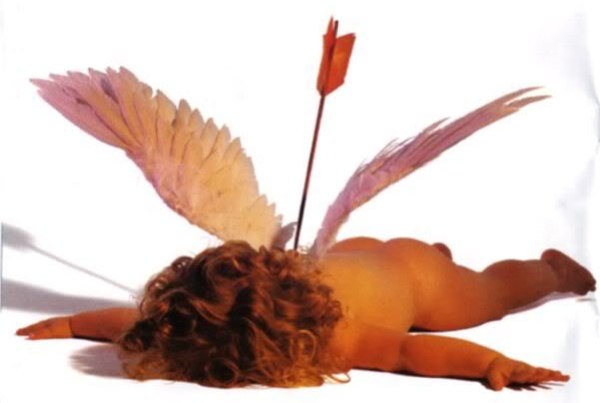
And if you see Cupid, tell him I said, “Flip bricks!”
I know you’re wondering what could’ve happened to me
The romantic trauma I suffered must’ve been devastating
It’s nothing like that; I’ve just come to my senses
And the mere mention of love sets off all my defenses
I’ve been in love a time or two
And I believe that love makes men into fools
We end up in stores holding purses and shit
And answering questions like, “Do I look good in this?”
Maybe it’s not love I have a problem with
Just the senseless rigmarole that comes with it
Who really has the patience to date nowadays
It seems like everyone’s just out to get laid
I’m looking for that deep down, butterfly giving, soul stirring love
The kind that makes you think that person was sent from the heavens above
I want a soul mate, not a fucking booty call
I want somebody who’s down to be there through it all
A partner in all that life brings, whether it’s good or bad
Someone who’s an instant pick-me-up whenever I’m sad
But since no one else in the world is looking for that
I guess me will love I because I’ll always love me back

dead-cupid

Need Versus Want

Good afternoon world! I hope this blog finds you in good health and even better spirits. As you can see I’m trying to do better about writing on a more consistent basis. Its highly doubtful that I’ll be able to keep up my current pace, but I will try. Now, I know you’re looking at the title for today’s rant and wondering what exactly could I be talking about. Well, let’s dive right in.

As I was sitting at my laptop, playing around on Facebook, I came across this picture posted on a friend’s timeline…
541794_558194304208470_546420309_n
The picture was accompanied with the caption: “Why only when their life is a mess?” Now, this wasn’t the first time that I’ve come across this picture, or some variation of it. I totally agree with what it says, I actually posted this picture on my own timeline in October…
966_374492152635887_464614392_n

My issue is with the question posed along with the picture.

There’s a reason why a man NEEDS a woman when times are bad. That’s because that’s when a man NEEDS someone that has his back, someone that’s holding him down through thick and thin. He NEEDS someone encouraging him to keep fighting. He NEEDS someone reminding him of his worth, because the world has found a way to knock him down and shake his confidence. He NEEDS the strength that only the love of a woman can provide at that time. When things are going good, he WANTS a woman because he WANTS to share his success with someone that cares about him. There’s a difference. The thing most women don’t realize is that in order to be the woman he WANTS, you have to be the woman he NEEDS.

That’s not to say that women are expendable when a man has everything and invaluable when he has nothing. In the mind and heart of real man, the NEED of a good woman when he’s down on his luck and the WANT of a good woman when he’s on top of the world are one in the same. Its all about the wanting/needing someone in your life that can provide what the world doesn’t give. A man always needs a woman to balance him out, no matter what the situation is. There are certain things that we just aren’t capable of doing for ourselves. Now, I know everybody’s mind almost instantly wants to take that last sentence with a sexual undertone, but its much deeper than that.

By nature, the vast majority of men are hunters and providers. We have the innate ability and drive to go out and make something happen. By nature, the vast majority of women are nurturers. They’re born with the instincts to take whatever the world gives them and make it into what they need. They’re like two sides of the same coin, you need both to truly succeed. That’s the reason why men that have the love of a good woman feel like they can do anything.

Now, I understand why my friend posed the question. She, like most women in my generation, have been hurt by men. They’ve gone out of their way to try and be the woman that a man NEEDS, only to watch that guy walk out on them. Or cheat, or commit one of a number of transgressions that have the ability to monumentally shake a person’s faith in the opposite sex, and maybe even themselves. And it sucks. Trust me, I know. It sucks to open yourself up like that and see it blow up in your face. But the thing that needs to be remembered is that it takes more than a dick to be a man, just like it takes more than a vagina and breasts to be a woman. You have to look at the content and character of a person before you can fully determine whether or not they’re worthy of your most precious gift, your heart.

That’s all I got for today, I think. So until next time, peace and love…

Love, Marriage & Everything In Between… (Just My Thoughts & Feelings)

Good morning world! I hope this blog finds you in good health and even better spirits. I know its been a while since I actually wrote to you guys, but I haven’t had much to say. Today, we’re gonna talk about probably one of my favorite and least favorite subjects, love. I know what you’re thinking, “How can it be a favorite and least favorite at the same damn time?” That’s simple, keep reading and you’ll find out.

Anybody that truly knows me knows I’m true romantic at heart. I’m the guy that watches romantic comedies. Not because I’m being forced to by my girlfriend/wife, but because I like to see people in love. That and Hollywood’s warped perception of the dynamics of romantic relationships is the funniest thing ever. But that’s a topic for another day, maybe.

As I sit here on this December morning at the ripe “old” age of 32, I find myself recounting my romantic history. I can count on a single hand the number of SERIOUS relationships I’ve had in my life. Of course, like any reasonably attractive male in America, I’ve had my fair share of casual relationships. And I’ve had more than my fair share of bullshit interactions with women to fill in the time in between something with a little more substance. But as I sit here and think of those handful of true romances, I realize that I’ve only been in love once in my life. That’s not to say that I didn’t have very strong feelings for all of the women that were more than just bit players in the grand production that is my life. Hell, I can say with a certain amount of certainty that I loved (and in some cases might still love) every woman that has played a significant role in my own personal Rom-Com. But, so far, there has only been one woman that I can truly say I was IN love with.

I think a lot of people don’t know the difference between LOVING someone and being IN LOVE with someone. That could be one of the reasons why the divorce rate in this country is so damn high. Who knows. I wish I could put into words what it means to be in love, but the experience is different for each person. So, I’ll try my best to describe what being in love was like for me. Hopefully, it’ll help. First off, all the cliches that you hear were true for me. I found myself thinking about her first thing in the morning and as I laid my head down each night. I was ready, willing and able to do anything that would bring a smile to her face. I placed her above myself in the hierarchy of my life, almost to my detriment at times. I loved her daughter as if she was my own. I lost track of “me” and focused solely on “us.” I know you’re probably thinking none of these things sound especially monumental, but they are to me. I’m probably one of the most self-centered people you will ever meet, but that’s because I only have myself to worry about. So for me to put someone else’s wants and needs ahead of my own is enormously significant.

For as grateful as I am to be able to say that I was in love with someone at some point in my life (because everybody is not that fortunate), I think it came a little too early in my life. I was in my mid-20’s and still smelling myself. While a part of me was ready to settle down the other half wanted to be on some Wilt Chamberlain type shit. Talk about a conflict of interest. I’m not sure if this internal strife led to the destruction of my relationship with this young lady, but I know it has kept me from truly committing to anyone since then. That’s not to say that I haven’t had offers, but I knew that I still needed to work on me a little bit more. Its hard to wholly give yourself to one person when you’re still trying to smash every PYT that walks past you. I’d rather be alone than be a cheater, I do have some kind of moral fiber.

So here I am, awaiting the chance to take on the next great adventure that my life has to offer me, married life and parenthood. And while I can have the former without the latter, I’m not one for reversing that. Did I lose some of you? Let me say it differently then. I’m at point in my life (and probably have been for the better part of 2-3 years) where I’m ready to be a husband and father. Its one thing I’ve never tried my hand at and I’m anxious and excited to do. And while I would be able to live with being a husband only (even though its not my preference), I can’t say thing about only being a father. No disrespect to any of you that had children out of wedlock, but that’s just not who I am. I was raised to believe that the title of husband was mandatory to become a father. I know that’s biologically correct (I’m not an idiot), but you know what I mean. Like I said before, I do have some kind of moral fiber. Once again, no disrespect to those of you that took a different path to parenthood.

I was raised to think that being a husband was the second greatest position a man could ever hold, second only to being a father. That’s why I have the hardest time understanding men that shy away from stepping up to the plate, especially when it comes to their children. I understand shit happens, relationships fall apart, condoms break, accidents happen. But if your actions resulted in the creation of a life (the only miracle that humans can pull off), be adult enough to shoulder the responsibility. Scratch that. Saying it like that makes it sound like a burden. While the financial, emotional and physical strain of having kids in today’s society might be daunting, no kid should ever be viewed as albatross that you’re forced to bear. Having kids is a privilege. A privilege that some people take for granted. If you don’t believe me, just ask someone that’s trying to have kids with no success.

I dream of the day that I have a son (even though I know I’m going to have a daughter. Karma is an evil bitch). I daydream about playing catch, teaching him to tie a tie, etc. I know it sounds like a bunch of sappy shit and some of you might not believe me, but these are thoughts that run rampant in my head. I pray on daily basis for the opportunity to be a husband and father. I just don’t get how everybody doesn’t feel like that. Okay, I can understand not wanting to be married, its not for everybody. I get that. But what kind of monster doesn’t want to be a parent? Especially if you already have children? Seriously, if you can’t get excited about being in your child’s life and seeing them become the person that God intends for them to be, you should kill yourself. Twice. Maybe three times just to be certain that you did it right.

My dreams of fatherhood doesn’t end with just me and my child. I have large scale dreams of grand and opulent wedding that all my family members and closest friends attend. My hours of REM sleep are spent envisioning a life that I want. Tasks and duties that would seem small and mundane to those that are already married or have no soul are the things I pine for. Like I said, I’m a romantic. While most people pray for a million dollars, I pray to meet the woman I’m going to spend my life with. I wish for a million dollars too, but I want the woman more.

I think that’s all I have for today. Actually its not, but where my train of thought is heading now would better be served as a separate entry. So maybe we’ll make that happen tomorrow, but I’m not making any promises. So until the next time we meet, peace and love…